Showing posts with label Review. Show all posts

Thursday, September 1, 2011

IROM CHANU SHARMILA: I am trying to revisit AFSPA, says Chidambaram!

For LEED Consultancy / IGBC Certifications, Green Building Design, Green Homes, Green Factory Buildings, Green SEZs, Green Townships & Energy Audits - www.greentekindika.com

Courtesy: PTI / The Hindu / NEW DELHI, September 1, 2011.

Home Minister P. Chidambaram at the Parliament House in New Delhi. A file Photo: Rajeev Bhatt
Home Minister P. Chidambaram at the Parliament House in New Delhi. A file Photo: Rajeev Bhatt - The Hindu.

A fresh attempt is being made to build consensus within the Government to amend the controversial Armed Forces Special (Powers) Act (AFSPA), Home Minister P Chidambaram indicated today.

"I am trying to revisit AFSPA but as you know one needs to build a consensus within the government before amendments can be brought before Parliament," Mr. Chidambaram said while replying to questions after presenting the monthly report for his Ministry.

"We are trying. You know we have tried in the past," he said during the press interaction on being asked whether AFSPA could be repealed in Manipur and Jammu and Kashmir.

He said in J and K there was a consensus within the Central Government that if the state withdraws the Disturbed Areas Act, AFSPA will automatically go.

"You know that in Kashmir, we have asked the state government to review the application of Disturbed Areas Act and if that act is reviewed, then automatically if the DA does not apply to areas in Kashmir, the AFSPA is not applied to that area in Kashmir.

"So we took that route in Kashmir. In Manipur, the demand is that AFSPA should be repealed. There is a Jeevan Reddy committee report. We have discussed this a couple of times.

"As I said, there is no consensus yet and I am trying to build consensus..I have not succeeded so far. There is a statement of the Prime Minister (Manmohan Singh) that we will replace the AFSPA with a more humane act. So we are trying," he said.

The army has conveyed its apprehensions to the Defence Ministry that replacement of AFSPA or any dilution could hamper its operational capabilities to effectively deal with militancy and insurgency.

"On the first route (in JK) there is a consensus at the Centre. Now at the operational level, the JK govt would have to, in the Unified Command, agree to review the application of Disturbed Areas Act.

"If they are able to lift the DAA from, say five places, then AFSPA would not apply to those five places. So that is something which they have to do and I am in touch with the Chief Minister (Omar Abdullah)," Mr. Chidambaram said, adding Mr. Omar has to "weigh the pros and cons and then decide when to do it, where to do it. That is for them."

Omar's government in the state has already constituted a Committee earlier this year to review the DAA. The Committee comprises Director General of Police, Home Secretary and Corps Commander of 15 Corps (for Kashmir) and Corps Commander of 16-Corps (for Jammu).

The Committee has met twice so far and is expected to meet again next month.

The AFSPA gives the Army the powers to detain and, if the situation warrants, eliminate suspected terrorists when they are fighting insurgents without the fear of prosecution.

The Act is only in force in some areas in Kashmir and insurgency-affected states in the north east.
The Second Administrative Reforms Committee had suggested to the government replacing of the Act with an amended law which gives the Centre the right to deploy the Army or para-military forces in situations involving national security.


More Hot News, Interesting Article, Features, et al @ http://www.thehindu.com

Monday, August 29, 2011

BOOK REVIEW: 'Priya In Incredible Indyaa' By Namita Gokhale!


For LEED Consultancy / IGBC Certifications, Green Building Design, Green Homes, Green Factory Buildings, Green SEZs, Green Townships & Energy Audits - www.greentekindika.com

http://ibnlive.in.com The New Indian Express / Posted on Aug 29, 2011 at 12:07pm IST.


More than two and a half decades after her first acclaimed novel, Paro: Dreams of Passion, Namita Gokhale has resurrected some of its characters in her recently released Priya In Incredible Indyaa. A ruthless caricature of how high society in the national capital works, the novel takes off from where Paro left.

Priya, whose parents married her to a lawyer Suresh Kaushal “of sober habits”, has grown middle-aged, and her husband is now a minister of state. Her sprawling colonial bungalow in Lutyens’ Delhi is a far cry from the cramped 1-BHK apartment in suburban Mumbai where she was brought up. While enjoying the position of a woman of some consequence, she struggles with Delhi’s high society.

As Namita sweeps you into the hurly burly of Delhi’s politicians, pimps and heretics, you realise that like Priya, India has also changed. Though the tone is unsparing, occasionally wicked, the novelist thankfully does not delve into a socio-political analysis.


Rest at,


Namita Gokhale (Hardcover - May 31, 2011)
$34.50


       Shankar (MARATHI)


Sunday, August 28, 2011

BOOK REVIEW: 'Growing up bin Laden' By Jean Sasson!

For LEED Consultancy / IGBC Certifications, Green Building Design, Green Homes, Green Factory Buildings, Green SEZs, Green Townships & Energy Audits - www.greentekindika.com

Swati Daftuar, The Hindu / August 27, 2011.

Jean Sasson: Telling Osama's story. Photo: Special Arrangement
Jean Sasson: Telling Osama's story. Photo: Special Arrangement.


Jean Sasson on how and why she wrote Growing Up bin Laden.

On May 2, 2011, one of the most feared men in this century, Osama bin Laden, was killed. In the wake of his death, Jean Sasson's book, Growing up bin Laden, gained further momentum and became the one window into Bin Laden's life that wasn't entirely about his political beliefs and actions. Through Sasson, Osama's first wife, Najwa bin Laden, and his son Omar, tell their story of growing up as part of Bin Laden's family. Entirely unique and palpably humane, Sasson's book explores a part of Osama bin Laden that had been forgotten; an important piece of the puzzle without which the picture of this man can never really be complete.
How difficult was the challenge of separating Osama Bin Laden from Osama, a husband and father?
It was not difficult at all. When interviewing and writing, I followed the same routine. I start with their childhood and spend time finding out everything they can remember: from their first memory until the time we would consider him/her an adult. After I write a chapter, I ALWAYS send it to them to read to see if I have misunderstood anything. It happened quite a bit with this book due to emotions or language barrier. I let the story unfold through Najwa's personal memories. It was clear that Osama was a very serious but nice young man. He was not focused on the usual teenage things but had already started to look at how other countries and governments interacted with Islam and with the Middle East. Clearly, he did not like what he saw. I did the same with Omar, asking him to tell me his first childhood memory and life with his father. I was not offended to discover that the Osama Najwa married was a very nice person. I was regretful when it was clear that he was taking his family and the world down a dark path.
What started this project?
I was contacted in February 2008 and asked to write Omar's story. I was unsure if I was the correct person as I write about women and my readers tend to go for books about women. I talked with my literary agent and she spoke to a couple of publishers. While I was hesitating, I received an unexpected letter from Najwa; a letter from a mother's heart telling me about her fine son and his wonderful qualities. She never asked me to write the book, but it was clear that she wanted me to give the book a chance.
Then I got the idea that the book could be something I could write IF Najwa would participate. My literary agent agreed; I never take on a project until my literary agent is convinced. Omar asked his mother and came back to me with a surprising yes.


Rest at,


BOOK REVIEW: “Immortality: The Quest to Live Forever and How It Drives Civilization.”!

For LEED Consultancy / IGBC Certifications, Green Building Design, Green Homes, Green Factory Buildings, Green SEZs, Green Townships & Energy Audits - www.greentekindika.com

By STEPHEN CAVE / nytimes.com / Published: August 27, 2011.

Gemaeldegalerie, Staatliche Museen, Berlin/Art Resource, NY.
“The Fountain of Youth,” painted by Lucas Cranach the Elder in 1546, illustrates our long obsession with immortality.


Stephen Cave is the author of the forthcoming book “Immortality: The Quest to Live Forever and How It Drives Civilization.”


Berlin

IMAGINE nobody dies. All of a sudden, whether through divine intervention or an elixir slipped into the water supply, death is banished. Life goes on and on; all of us are freed from fear that our loved ones will be plucked from us, and each of us is rich in the most precious resource of all: time.

Wouldn’t it be awful?

This is the premise of the TV series “Torchwood: Miracle Day,” a co-production of Starz and the BBC that has been running over the summer and ends in September. The “miracle” of the title is that no one dies anymore, but it proves to be a curse as overpopulation soon threatens to end civilization. The show is a nice twist on our age-old dream of living forever. And it is right to be pessimistic about what would happen if this dream were fulfilled — but for the wrong reasons. Materially, we could cope with the arrival of the elixir. But, psychologically, immortality would be the end of us.

The problem is that our culture is based on our striving for immortality. It shapes what we do and what we believe; it has inspired us to found religions, write poems and build cities. If we were all immortal, the motor of civilization would sputter and stop.

Poets and philosophers have long been attuned to the fact that the quest for immortality drives much of humanity’s peculiar ways. But only in recent decades has scientific evidence backed this up.


Rest at,


Saturday, August 27, 2011

BOOK REVIEW: ‘Class Warfare.’ By Steven Brill!


For LEED Consultancy / IGBC Certifications, Green Building Design, Green Homes, Green Factory Buildings, Green SEZs, Green Townships & Energy Audits - www.greentekindika.com

thedailybeast.com / Aug 26, 2011 7:37 PM EDT.

brill-class-warefare-summers
‘Class Warfare: Inside the Fight to Fix America’s Schools’ by Steven Brill. 496 p. Simon & Schuster. $28. , AP Photo.

Legal journalist and entrepreneur Steven Brill turns to education reform in a new book, ‘Class Warfare.’ Brill talks to Nick Summers about the crisis in America’s schools.

Steven Brill, a journalist who founded American Lawyer magazine and Court TV, is only a recent student of the education beat. He first wrote about the field just two years ago, with a feature in The New Yorker about the New York City school system’s “rubber rooms”—spaces where teachers accused of misconduct were warehoused, doing nothing for full pay, in some cases for years. But Brill, it turns out, is a quick study. His new book, Class Warfare, is a deeply reported work on the state of the school reform movement in the United States, written in dense bursts that give color to both policy and people: the origins of President Obama’s Race to the Top program; a clandestine meeting of billionaire reformers that ends in a stranded Fifth Avenue elevator; the arc of a bright young teacher whose idealism gives way to burnout.

Mostly, though, Class Warfare reads as an argument against the teachers unions—functioning as the second half of a one-two punch, after the influential 2010 documentary Waiting for Superman, that casts the unions as the main obstacle to fixing America’s schools.

The book quotes one liberal Democrat, then former San Diego schools head Alan Bersin, explaining his evolution on teachers unions to Joel Klein, a man of similar politics who was beginning a job running New York’s schools. “It didn’t even take me ninety days,” Bersin tells Klein in Class Warfare, “before I went from being a Democrat who always thought the unions were the good guys to realizing that unions were not the good guys—that the Democratic Party and the school reform movement had run into a rock because of the transformation of the teachers’ union movement from the ’60s to the ’90s from a progressive force to the most conservative force in the mix.”

For Brill, this epiphany echoed his own changing politics. “I think that’s true, and I think that Democrats have had to come to grips with that,” he says. “A Joel Klein or an education reformer can say persuasively that public education is the civil rights issue of this era. And the reason they can now say it even more persuasively is what the success of the good charter schools prove: not that if you call something a charter school it’s automatically good, but that demography does not have to be destiny.”


Rest at,


Friday, August 26, 2011

BOOK REVIEW: 'Dead Reckoning' tells the truth about 1971 War!


For LEED Consultancy / IGBC Certifications, Green Building Design, Green Homes, Green Factory Buildings, Green SEZs, Green Townships & Energy Audits - www.greentekindika.com

Tathagata Bhattacharya, ibnlive.com / Posted on Aug 26, 2011 at 07:49pm IST.


Sarmila Bose's latest book, Dead Reckoning - Memories of the 1971 Bangladesh War, is possibly the most nuanced and non-partisan attempt to gauge the extent and magnitude of atrocities committed during the war.

Till now, most works on the subject have been by Bangladeshi authors, who have mostly given in to their emotions than reason.

Bose spent years travelling throughout the length and breadth of Bangladesh, went to numerous villages, spoke to thousands of people to draw an evidence-based conclusion which is credible.

Bose's work demolishes the narrative every Bangladeshi or Indian (specially if you are a Bengali) have been hearing for ages now: That the Pakistan Army (Khan Sena in Bangladeshi parlance) systemically massacred millions of Bangladeshi people.

Bose shows that the total number of human fatalities in the war was to the tune of 1, 00, 000. This includes Indian and Pakistani war dead, fallen Bangladeshi guerrilla fighters and civilians.

Before training guns on Bose, it is important to know that she is a Bengali woman who traces her ancestral roots to Bangladesh and comes from a family whose nationalist credentials are beyond dispute. She happens to be the granddaughter of Netaji Subhas Chandra Bose.

Bose's book is not an attempt to exonerate the Pakistani armed forces. It's unfortunate that a section of Bangladeshi and Indian people have regarded her work as a betrayal of a kind.


Rest at,


BOOK REVIEW: 'The Wandering Falcon' by Jamil Ahmad!


For LEED Consultancy / IGBC Certifications, Green Building Design, Green Homes, Green Factory Buildings, Green SEZs, Green Townships & Energy Audits - www.greentekindika.com

Basharat Peer, The Guardian / Saturday 25 June 2011.

Tribes on the Af-Pak border
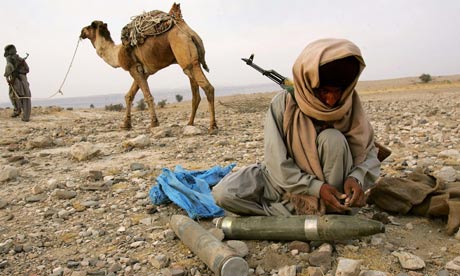
Border crossings ... a guerrilla from the Marri tribe prepares rockets for firing on a Pakistani troop outpost, 2006. Photograph: John Moore/Getty Images.

Jamil Ahmad, a Pakistani civil servant, began his career in Baluchistan in the 1950s. Most civil servants posted to such a remote area as Baluchistan, North Western Frontier Province, or the tribal areas along the Pakistan-Afghan border would lobby hard for a posting in the bigger cities of Pakistan, but Ahmad stayed on, spending several decades working as an administrator. Unlike most officials from the plains, Ahmad learned Pashto, the language most tribes along the dreaded frontier speak. Along the way, he took notes, and by 1974 had turned his impressions into a collection of inter-linked stories.

Ahmad stashed away his first draft, leaving it untouched for three decades. In 2008, he was 75, retired from the civil service, and living in the Pakistani capital, Islamabad. Two young Pakistani women, a Lahore-based bookseller, Aysha Raja, and a Karachi-based columnist and editor, Faiza Sultan Khan, called on Pakistani authors to submit stories for a competition. Ahmad's younger brother insisted that he must show them his work. After reworking the 35-year-old manuscript, Ahmad sent it to Khan, who championed it, and showed it to an editor at Penguin.

Two years later, Jamil Ahmad made his debut as the 78-year-old writer of The Wandering Falcon, one of the finest collections of short stories to come out of south Asia in decades. The Wandering Falcon begins in Baluchistan in the early 1950s, as a tribal chief's daughter married to an impotent man elopes with her father's servant and finds shelter in an isolated fort manned by a few dozen lonely soldiers. Ahmad conveys the fear and desperation of the lovers as he describes them being offered water on their arrival at the fort gates after an arduous trek. "As she sensed water, she started sucking his hand and fingers like a small animal. All of a sudden, she lunged towards the bucket, plunged her head into it and drank with long gasping sounds until she choked."

The couple find shelter in an abandoned corner of the fort. A son is born, and they raise the child in a hidden corner for six years until the Siahpad, their tribe, sends men in pursuit of them. The couple and their son run for safety but are hunted down, and two stone shrines are raised over their graves as a sign of Siahpads' revenge. Tor Baz, the boy left to die, is adopted by Baluch rebels fighting the Pakistani government and grows up to be the wandering falcon of the title, a boy with no fixed identity, moving between precarious worlds full of humanity, courage, cruelty, and above all poverty so dire that survival seems to be the greatest virtue.

Although the tribal areas of Pakistan have dominated the news and opinion pages for years, rarely has a writer shown greater empathy for its people, or brought such wisdom and knowledge to writing about a terrain largely inaccessible to journalists and writers. The Pak-Afghan frontier has become synonymous with terrorists and the mechanised war of drones. The ambitions and interests of nation states – America, Pakistan, Afghanistan – have rendered invisible the Baluch. Jamil's stories return the humanity to this devastated region. His characters defy the much-used categories of our times: moderates or extremists, Salafis or Sufis, pro or anti-American. Their concerns are often ordinary, mostly difficult struggles for a life of dignity and love.


Rest at,


 Kindle: